Search Norman homes online this week and you will scroll past listing after listing priced well north of $400,000. Pull up what actually closed in those same neighborhoods over the past six months, and the number drops by nearly a third. Same city. Same school zones. Two prices that barely resemble each other.
That gap is not a typo, and it is not a market crash. It is the clearest evidence yet that Norman has stopped behaving like one housing market with one honest median. It now behaves like two markets wearing the same zip code, and knowing which one a specific listing belongs to matters more than the citywide number any portal hands you.
The Spread Nobody Explains on the Listing Page
Here is the number that should make a buyer pause before anchoring to anything they see online. Over the six months ending in July 2026, the median closed sale price across roughly 734 tracked transactions in Norman was $284,450, with the middle half of those sales closing between $210,000 and $394,899. Meanwhile, the median asking price across active listings that same month sat at $430,000, roughly 50 percent higher than what buyers have actually been paying at the closing table.
Redfin's independent count backs up the lower number, not the higher one. Over the three months ending in May 2026, Norman's median sale price came in at $282,000, down 1.1 percent from a year earlier, with homes taking a median of 35 days to sell compared with 28 days the year before. Zillow's broader citywide average value tells a similar story at $265,751 as of June 2026, up a modest 1.3 percent year over year.
So three separate trackers agree the typical Norman home is closing in the high $200,000s. Only the pool of homes currently for sale is asking closer to $430,000.
That spread does not mean sellers are dreaming or that the market suddenly cooled by a third overnight. It means the homes sitting active on the market right now are a different, pricier mix than the homes that already sold. Figuring out why requires looking at what is actually pulling buyers toward campus, and what is quietly pushing prices down somewhere else entirely.
Where OU's Enrollment Boom Fits In
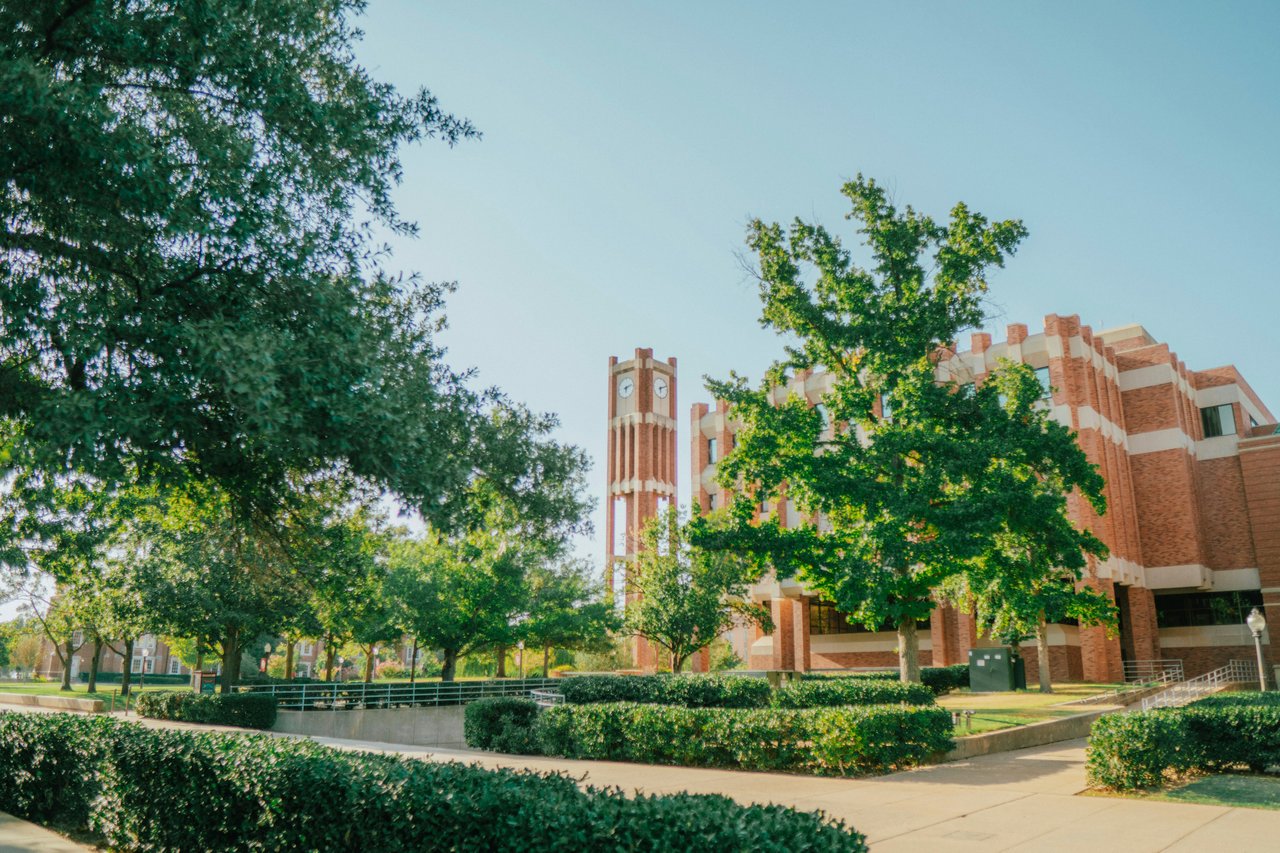
The University of Oklahoma's most recently reported freshman class, in fall 2025, was its fifth consecutive record-breaking class in a row. Those 6,251 incoming students made up the largest freshman class in state history, and freshman enrollment overall has climbed more than 30 percent over three years, helping push total enrollment across all OU campuses above 36,500.
Most of those students are not living in a dorm. According to U.S. News data from fall 2024, 72 percent of OU students live off campus. Every year enrollment grows faster than on-campus beds, more of that growth lands directly on Norman's rental and resale housing stock, not on university property.
And on-campus capacity has not kept pace with demand from returning students. As of February 16, 2026, there were 932 applications on the waitlist for Traditions Square, the apartment complex that primarily houses upperclassmen and staff. A new residence hall, the South Building, opens this fall with roughly 580 beds, but OU is converting Traditions East into first-year housing for the 2026-27 academic year at the same time. A new dorm opens, and upperclassmen options shrink in the same season.
That combination sends juniors, seniors, grad students, and staff looking for houses and rentals within walking or biking distance of campus every single year, with more competition than the year before. That demand lands hardest on specific pockets, not on Norman as a whole, which is exactly why a citywide median stops being useful the moment you start comparing neighborhoods.
Two Norman Markets, Not One
Area | Housing character | What's driving price |
|---|---|---|
University neighborhood / Campus Corner corridor | Mostly built 1930s to early 1970s, a mix of Traditional, Tudor revival, and mid-century ranch homes plus condos, ranging from 800-square-foot units to 3,000-square-foot houses | Walk-to-campus demand from upperclassmen, staff, and investors buying with rental income in mind |
Downtown Norman | Established, walkable core near the historic district | Average home value actually fell 6.2 percent over the year ending May 2026, even with the walkability premium everyone assumes it should carry |
Southeast Norman | A mix of apartment buildings and single-family homes near Highways 9 and 77, with more rural land, including horse property, toward the outskirts | Rental concentration is heaviest along the highway corridor, lighter and more owner-occupied farther out |
West Norman, Hall Park, Brookhaven | Established, single-family-dominated neighborhoods farther from campus | Ordinary owner-occupant demand, not rental-return math, sets the pace here |
Notice that Downtown Norman does not fit the simple story. It sits close to campus and to the historic core, and its values still slipped over the past year. Proximity to OU is not a blanket price booster across every submarket. It is concentrated in specific corridors where investors and renter demand are actively bidding against family buyers, and largely absent everywhere else.
That is the piece a citywide median hides completely. A $430,000 active listing near Campus Corner and a $280,000 closed sale in West Norman can both be accurate, current, and telling you nothing about each other.
What This Means If You're Comparing Neighborhoods
If Norman is on your shortlist against Edmond, Moore, or Yukon, treat the citywide number as a starting question, not an answer.
- Ask for closed comps in the exact submarket you're considering, not a citywide average. A campus-adjacent comp file and a West Norman comp file will tell two different stories.
- Expect a faster pace near campus. Norman's pending-to-active ratio sat at roughly 0.64 as of July 2026, with active listings carrying a median age of about six days, a sign that well-priced homes near the university are not sitting around waiting for a second look.
- Expect a slower, softer pace elsewhere. The citywide days-on-market figure climbed to 35 days as of May 2026, up from 28 a year earlier, which points to more breathing room outside the campus corridor.
- Weigh the walkability trade-off honestly. If proximity to campus, restaurants, and foot traffic genuinely matters for your household, budget for the premium and the competition that comes with it. If it does not, the family-neighborhood submarket is trading much closer to that lower, more grounded closed-price band.
A home's distance from campus is not a reliable price predictor on its own. Downtown Norman proves that. What matters is whether a specific address sits inside the corridor where OU's enrollment growth is actively bidding up demand, or outside it.
Frequently Asked Questions
Is Norman a buyer's market or a seller's market right now? Both, depending on where you're looking. The campus corridor is still moving fast, with a pending-to-active ratio near 0.64 and listings aging only about six days as of July 2026. The broader city is cooling slightly, with days on market rising to 35 as of May 2026.
Should I trust the median price I see on a real estate portal? Treat it as a starting point, not a verdict. A citywide median blends a rental-driven, campus-adjacent segment with an ordinary family-resale segment, and the two behave differently enough that a single number can mislead you either direction.
Does living closer to OU always mean paying more? No. Downtown Norman sits near campus and the historic core, and its average home value still fell 6.2 percent over the year ending May 2026. Rental-driven demand is concentrated in specific pockets, not spread evenly across every neighborhood near the university.
Comparing neighborhoods block by block is exactly the kind of work that turns a confusing search into a confident offer. If you want a closed-comp breakdown for the specific part of Norman you're considering, or you're weighing Norman against another OKC-metro suburb entirely, Gina & Joseph Underwood can walk through the numbers with you and help you figure out which submarket actually fits your budget and your life. Start with a free home valuation or take a closer look at what's currently happening in Norman.