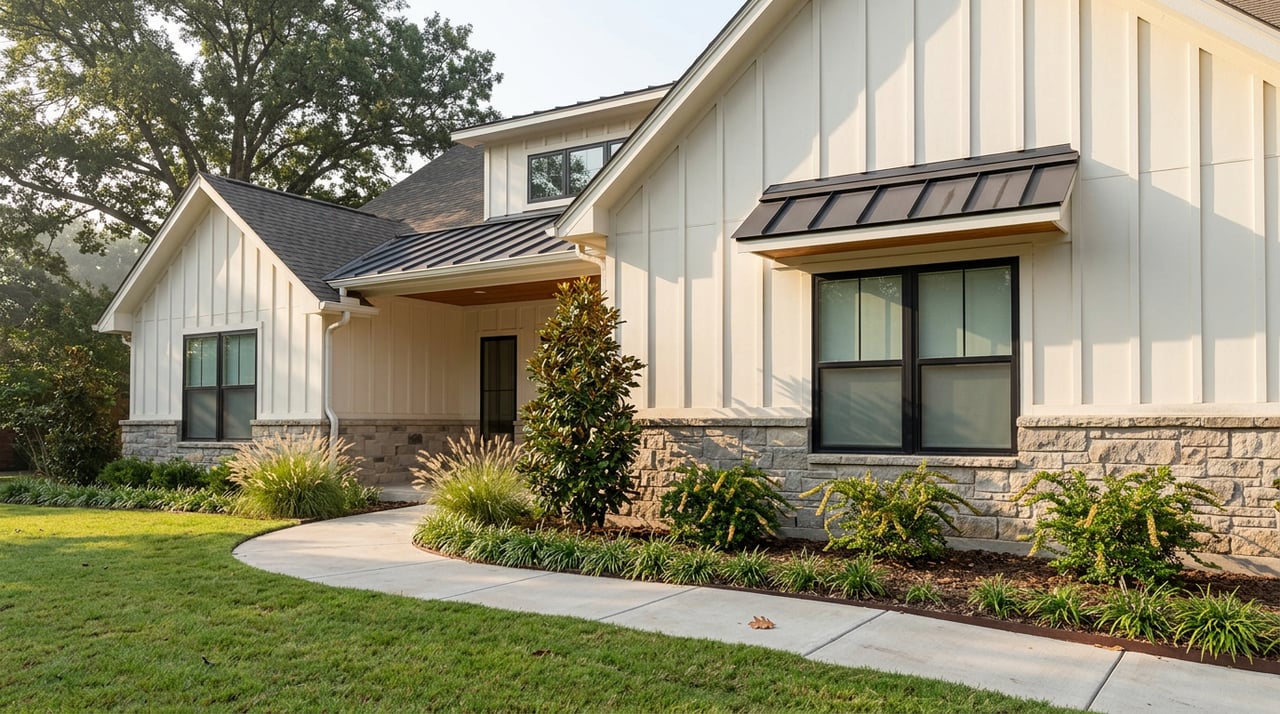
According to Piedmont News Online, in February 2025, a handful of homeowners in Gordon's Hollow, a small subdivision just southwest of Piedmont, showed up to a Piedmont Municipal Authority meeting with the same question: could the city cut off their water? They had bought lots priced from $55,000, built homes that later listed above $500,000, and assumed the monthly water bill meant a normal municipal hookup. It didn't. The line feeding their homes ran through Piedmont's system but had never been permitted as a legal connection, and the Oklahoma Department of Environmental Quality had just issued consent orders to sort it out.
That single meeting is the clearest argument for why "well or city water" is the wrong question to ask about a Piedmont address. The real question is which of Piedmont's three water realities a specific property sits inside, because that answer changes what shows up on the disclosure form, what an inspector needs to check, and how much room you actually have to negotiate before you sign anything.
Piedmont Isn't One Water System, It's Three
Inside Piedmont's city limits, most homes connect to municipal water and sewer maintained by the city's own utility department. Drive a few minutes past the newer subdivisions and the picture changes. Homes on acreage, especially anything built before the 1990s or sitting outside the current city boundary, are commonly on a private well and septic system instead, with no city pipe anywhere nearby.
Then there's a third category, and it's the one buyers rarely think to ask about: subdivisions that sit just outside Piedmont's limits but still receive Piedmont water through a line that was never formally approved for that use. Gordon's Hollow is the documented example. Piedmont News Online reported that Piedmont's own city attorney described the subdivision this way:
"operating an independent water system"
In practice, it was reselling city water to homeowners who had no formal connection agreement with the city at all. A 2003 moratorium had already barred Piedmont from selling water outside city limits except to pre-2000 homes with no adequate water source of their own, and the area never developed its own rural water district to fall back on. The consent order gave the city until July 1, 2025 to bring the connection into compliance or risk fines of up to $10,000 a day.
Whatever the final fix looked like for that specific subdivision, the lesson generalizes. A Piedmont listing that says "city water" doesn't always mean a permitted, standalone municipal connection. It can mean city water resold through a private line, private well water, or in some listings near the city's edge, more than one option offered on the same parcel, with propane, septic, and both city and well water all mentioned side by side.
What Oklahoma's Disclosure Form Actually Requires
Oklahoma's Residential Property Condition Disclosure Statement, the form every seller working with a licensed agent has to complete, asks two questions that matter here directly. Question 23 asks whether the seller is aware of any defects related to the sewer, septic system, lateral lines, or aerobic system. Question 36 asks whether the seller is aware of any wells located on the property. Both answers come from the seller's actual knowledge, not from any inspection the seller ran themselves, and the form states plainly that it isn't a warranty and isn't a substitute for the buyer's own inspection.
Two details are easy to miss. The statement is only valid for 180 days after the seller signs it, so a disclosure completed last winter needs a fresh look if a deal drags into summer. And Shelton Law explains that the Act generally applies when a licensed agent is involved in the sale. If a property changes hands without one, and the buyer never requests the statement in writing, the disclosure requirement may not apply at all, which is one more reason a for-sale-by-owner acreage listing deserves extra scrutiny rather than less.
What an Inspection Costs, and What the Lot Size Rules Assume
A septic inspection is a small line item next to the price of a house, but it buys real information before you own the problem. As a general range, inspectors typically charge $100 to $250 for a standard visual and functional check, with another $50 to $250 added if the tank has to be uncovered to reach it. If something has already failed, a full drainfield replacement runs $2,500 to $10,000. None of that is Piedmont-specific pricing, but it's the ballpark worth budgeting before waiving an inspection just to compete on a listing.
Oklahoma's septic code also assumes something about lot size that's worth knowing before you fall for a smaller acreage parcel. A lot served by public water typically needs at least half an acre to accommodate a septic system, while a lot relying on a private well typically needs at least three-quarters of an acre. Properties within 300 feet of certain protected reservoirs or streams face an additional requirement, a nitrogen-reducing treatment component that adds cost on top of a standard system. None of these numbers are guaranteed for a specific parcel. They're the starting assumptions a soil test and a licensed installer will confirm or correct.
- Standard septic inspection: roughly $100 to $250
- Additional fee if the tank must be uncovered: roughly $50 to $250
- Drainfield replacement if a system has failed: roughly $2,500 to $10,000
- Minimum lot size on public water: about half an acre
- Minimum lot size on a private well: about three-quarters of an acre
Why Three Sources Give You Three Different Piedmont Numbers
Ask three different sources what a typical Piedmont home costs right now and you'll get three different answers, and the size of that gap says something real about how mixed the town's housing stock actually is.
| Source and window | Reported figure |
|---|---|
| Active listings, July 2026 | Median list price $378,000 |
| Sales, three months ending May 2026 | Median sale price $413,000, up 3.3% year over year |
| Home value index, as of June 2026 | Typical home value $312,783, up 5.3% year over year |
None of these are wrong. They measure different things over different windows, one tracks what's currently listed, one is a rolling three-month sales median, one is an index built from estimated values across the whole housing stock. But the spread itself, from about $313,000 to $413,000 depending on the lens, matches what the water conversation already told you. Piedmont is genuinely two or three markets layered under one name, from starter-priced subdivision homes on city utilities to custom builds on acreage with a well in the backyard. The number a portal search shows you depends heavily on which slice of that inventory happens to be listed, or sold, that month.
The Negotiating Room 2026 Actually Gives You
Sales data covering the three months ending May 2026 makes the shift concrete: homes in Piedmont spent a median 53 days on market, up from 39 days over the same window a year earlier. A house that once needed less than six weeks to find a buyer now typically needs closer to eight.
That extra time matters for exactly the reasons above. In a market where offers used to arrive in days and buyers waived contingencies to compete, asking for a full septic inspection or a well flow test could cost you the house. With more inventory and more time on market, that trade-off has eased. A buyer looking at an acreage listing in 2026 has real room to ask for the inspection, wait on the results, and negotiate repairs or a price adjustment if a drainfield or well pump needs work, rather than assuming the seller's disclosure answer is the whole story.
None of this is legal advice. If a title report, survey, or disclosure statement raises a question about water rights, an easement, or a septic system's age, loop in a real estate attorney before you waive anything.
Frequently Asked Questions
Does every home in Piedmont have access to city water? No. Homes inside the current city limits generally connect to municipal water and sewer. Homes on acreage outside those limits, and some subdivisions that sit just beyond the boundary, commonly rely on private wells and septic systems instead.
How do I find out which system a specific Piedmont address uses? The seller's disclosure statement is the starting point, since Oklahoma law requires sellers working with an agent to answer specific questions about septic systems and wells. From there, a licensed septic inspector and a well test can confirm the system's actual condition rather than just its existence on paper.
Does a septic system limit how large a home I can build? It influences lot size requirements more than home size directly. Oklahoma's wastewater rules generally call for a larger minimum lot when a property relies on a private well instead of public water, and properties near certain protected streams or reservoirs face additional treatment requirements that add cost.
If you're weighing an acreage listing in Piedmont against a subdivision closer to city utilities, the water question deserves to come up before the offer, not after the inspection period starts. Gina & Joseph Underwood walk buyers and sellers through exactly this kind of due diligence, and you can start with a look at our Piedmont buyer's guide or reach out directly for a free home valuation before you write an offer or list your own acreage.