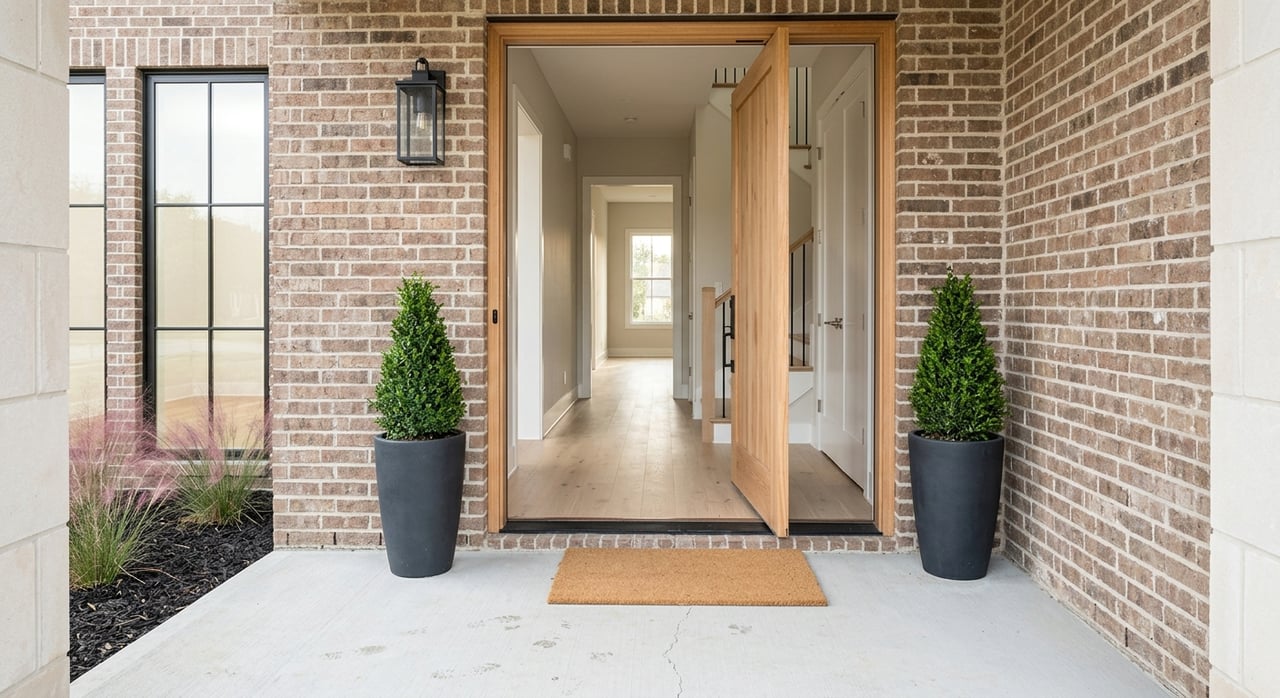
Buying a brand-new home sounds simple until the choices start stacking up. In Mustang, you may be comparing communities, floor plans, upgrades, school enrollment timing, inspections, and builder paperwork all at once. The good news is that you do not have to guess your way through it. With the right plan, you can move through new construction in Mustang with more clarity, fewer surprises, and stronger decision-making from day one. Let’s dive in.
Why Mustang draws new-construction buyers
Mustang continues to grow, and that growth helps explain why new construction is getting so much attention. According to U.S. Census QuickFacts for Mustang, the city’s population increased from 19,879 in 2020 to an estimated 23,965 in July 2024, a 20.3% jump.
That same Census snapshot shows a 75.8% owner-occupied housing rate, a median owner-occupied home value of $239,200, and a median household income of $87,844. For you as a buyer, that points to a community where homeownership remains a major part of the local housing picture.
New-construction options also give you more than one path. Some communities offer move-in-ready or nearly completed homes, while others let you choose a homesite and build from a plan. That flexibility can be helpful if you want either a faster timeline or more say in the final product.
Understand the different new-build paths
Not every new-construction purchase works the same way. In Mustang, builder community pages show a mix of inventory homes, homes that are already underway, and to-be-built options with homesite selection and plan choices.
That matters because your timeline, pricing, and decision points can look very different depending on what you choose. A completed home may move faster, while a homesite-based build usually gives you more input on layout and finishes.
Communities in and around Mustang show how varied the options can be. For example, Lennar’s Creekside Village highlights active single-family home sales, while Ideal Homes’ Somers Pointe emphasizes homesite choice and amenities.
Other examples include Homes by Taber’s Scissortail Crossing and Brookfield’s Mustang Park, which highlight different amenities and community setups. When you compare communities, it helps to think beyond the model home and ask how the purchase path fits your timing, budget, and priorities.
Compare communities the smart way
A polished model home can make every community feel appealing. What gives you confidence is comparing the details that will affect your daily life and your total cost.
Start with a few core categories:
- Commute access
- Homesite availability
- Included features versus upgrades
- Community amenities
- Expected build timeline
- School enrollment logistics
- Final price after selections and lot premiums
Some local communities market easy access to highways, the Kilpatrick Turnpike, Oklahoma City, or Will Rogers Airport. Others focus more on amenities like playgrounds, splashpads, pools, walking paths, fitness spaces, green belts, or sports courts.
The key is to compare apples to apples. A lower base price may not stay lower after lot premiums, design selections, and builder add-ons. On the other hand, a slightly higher starting point may include features that reduce how much you spend later.
Check school boundaries early
If school planning matters to your household, this step should happen early, not after you fall in love with a lot. Mustang Public Schools says it currently serves more than 13,500 students and projects growth to 16,000 before the 2026 school year and 19,000 by 2031, which makes boundary awareness especially important in a growing area.
The district’s 2025-26 attendance maps and growth update are active now, and the district advises families near a boundary to verify the address with Transportation. That is an important reminder because community branding, postal addresses, and attendance zones do not always line up exactly.
If your home is still under construction, there is some helpful flexibility. According to Mustang Public Schools enrollment guidance, a construction contract can be used as proof of residence during the build, and families generally have about 45 school days after initial enrollment to establish permanent residence.
Questions to ask about school logistics
Before you sign, it helps to confirm:
- The exact attendance boundary for the specific lot or address
- Whether the home’s projected completion supports your school-year timing
- What documents you will need for enrollment during construction
- Whether your address is close enough to a boundary to require extra verification
Know what the city, lender, and inspector each do
One of the biggest misunderstandings in new construction is assuming every form of review means the same thing. It does not. In a new build, the city inspection process, the lender appraisal, and your private home inspection each serve a different purpose.
The City of Mustang Community Development department oversees permits, code-related forms, residential projects, and inspection requests. The city also adopted updated codes in late 2022, including the 2020 International Residential Code and the 2020 National Electrical Code.
That is important oversight, but city inspections are not a substitute for your own inspector. A lender appraisal is also different. According to Fannie Mae’s completion requirements, new-construction appraisals can be based on plans, specs, or a model home, but completion still has to be verified before the loan can be sold to Fannie Mae, unless specific postponed-improvements rules apply.
What each review actually means
| Review type | Main purpose | What it does not do |
|---|---|---|
| City inspection | Checks code compliance during construction | Does not replace your private inspection |
| Lender appraisal | Supports the lender’s value and loan decision | Is not a condition or quality inspection |
| Private inspection | Evaluates the home’s condition and visible issues for you | Does not replace city code enforcement |
HUD makes this point clearly in its home inspection guidance for buyers: an appraisal is not a home inspection. If you want that extra layer of protection, you need to arrange it yourself.
Yes, a brand-new home can still need inspection
It is easy to assume a new home should not need a private inspection. In reality, a brand-new house can still benefit from one or even several inspection checkpoints.
Fannie Mae’s home inspection advice says inspections can uncover safety issues, illegal installations, and maintenance or structural concerns before purchase. It also encourages buyers to attend the inspection and walk through the home with the inspector when possible.
For new construction specifically, ASHI’s pre-drywall inspection guidance explains that one of the best times to inspect is after major structural components, rough-ins, windows, and exterior doors are in place, but before drywall goes up. ASHI also describes three common checkpoints:
- Foundation inspection
- Framing or pre-drywall inspection
- Final inspection
That gives you a practical framework. If your home is early enough in the build, you may want more than a final inspection. If the home is already complete or nearly complete, a final private inspection and a careful walk-through still matter.
Plan for upgrades before they snowball
Upgrades can make a new home feel more personal, but they can also push your budget faster than expected. In communities where you can choose a homesite, plan, or design features, early decisions often affect both price and timing.
This is one reason it helps to decide your priorities before you sit down with the builder. If you know which items matter most to your daily use or long-term satisfaction, you are less likely to make expensive in-the-moment choices that do not move the needle for you.
A simple way to stay grounded is to sort upgrades into three buckets:
- Must-have items you do not want to change later
- Nice-to-have features if the budget allows
- Items you can add after closing
That kind of structure can help you protect your budget while still creating a home that fits your life.
Understand disclosures in new construction
New construction does not always come with the same disclosure framework you may expect in a resale transaction. Under the Oklahoma Residential Property Condition Disclosure Act, a newly constructed, previously unoccupied dwelling is generally exempt from the disclosure act.
That does not mean you should move forward without asking questions. It means the paperwork may look different, and your due diligence matters even more.
This is another place where professional guidance can help. You want someone watching timelines, reviewing terms, helping you document questions in writing, and making sure your inspection process stays on track.
Why representation still matters with a builder
Many buyers assume the builder’s sales team will handle everything. The builder’s representatives can absolutely explain their homes, process, and contract terms, but you may still want your own advocate focused on your side of the transaction.
Oklahoma’s Brokerage Relationships Act outlines mandatory duties such as honesty, reasonable skill and care, timely handling of written offers and counteroffers, confidentiality, and written communication of compensation terms before the contract becomes effective. Those standards matter whether you are buying resale or new construction.
In a builder deal, having representation can mean help with:
- Comparing communities objectively
- Asking better questions in writing
- Tracking change orders and selections
- Coordinating inspection timing
- Reviewing deadlines and next steps
- Managing the contract-to-close process with fewer loose ends
Fannie Mae also notes in its homebuying team guidance that your real estate agent can help you evaluate inspection findings and decide whether they are deal-breakers or negotiation points. That kind of support can be especially valuable when the home is still being completed.
A confident new-construction plan for Mustang
If you want to feel more in control of the process, focus on a few key moves early. Compare communities carefully, verify the exact lot for school purposes, understand the difference between city oversight and your own inspection rights, and get clear on upgrades before design choices pile up.
Most of all, remember that new construction is not one-size-fits-all. In Mustang, the right strategy depends on whether you want a quick move-in, a build-from-scratch experience, or something in between.
If you are weighing new construction in Mustang and want a clear, step-by-step plan, connect with Gina Underwood for guidance that keeps your timeline, budget, and priorities aligned from community search to closing.
FAQs
What should you compare when choosing a new-construction community in Mustang?
- Focus on commute access, homesite options, included features, amenities, school-boundary verification, builder timeline, and the full price after upgrades or lot premiums.
Do you need a private inspection on a brand-new home in Mustang?
- Yes, many buyers still choose a private inspection because city inspections and lender appraisals do not replace an inspection arranged for your benefit.
What is the difference between a city inspection, an appraisal, and a private inspection on a Mustang new build?
- A city inspection checks code compliance, an appraisal supports the lender’s loan decision and value analysis, and a private inspection helps you identify condition issues before closing.
How does school enrollment work if your Mustang home is still under construction?
- Mustang Public Schools says a construction contract can be used as proof of residence during the build, with about 45 school days to establish permanent residence after initial enrollment.
Do newly constructed homes in Oklahoma come with the same disclosure forms as resale homes?
- Not always, because Oklahoma law generally exempts newly constructed, previously unoccupied dwellings from the Residential Property Condition Disclosure Act.
When should you make upgrade decisions on a Mustang new-construction home?
- As early as possible, because floor plan choices, homesites, and design selections can affect both your total price and your build timeline.