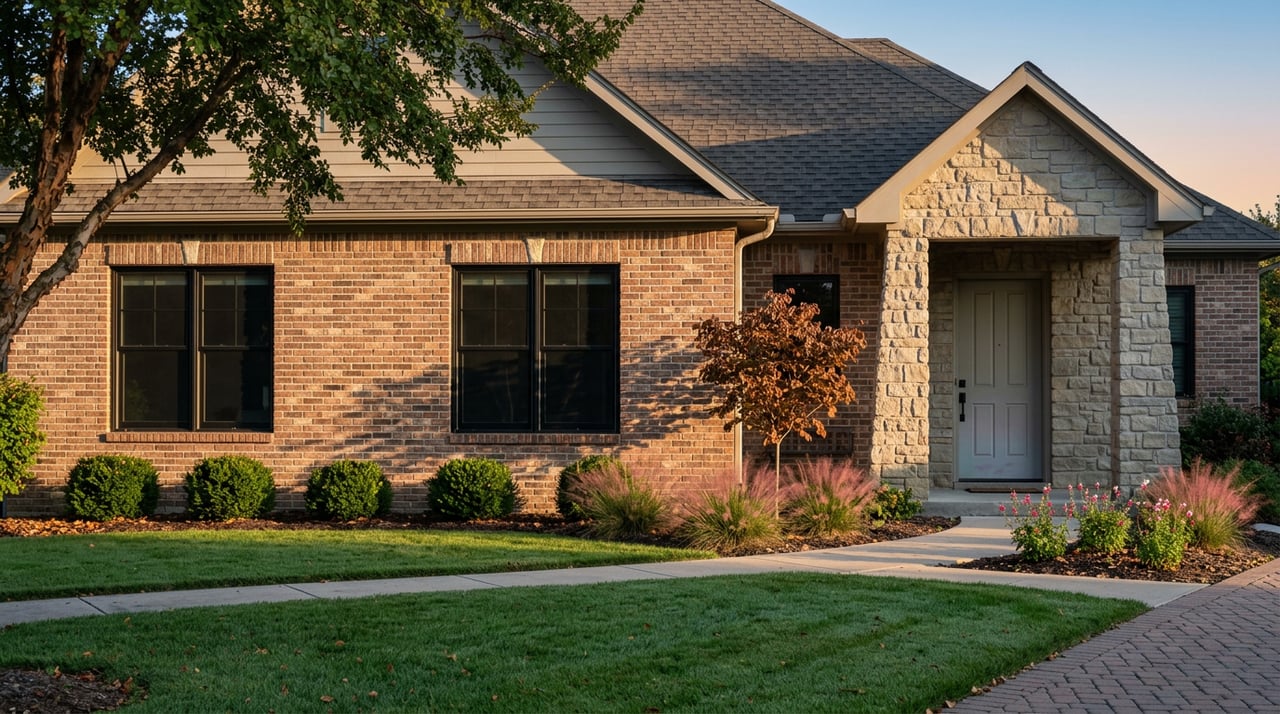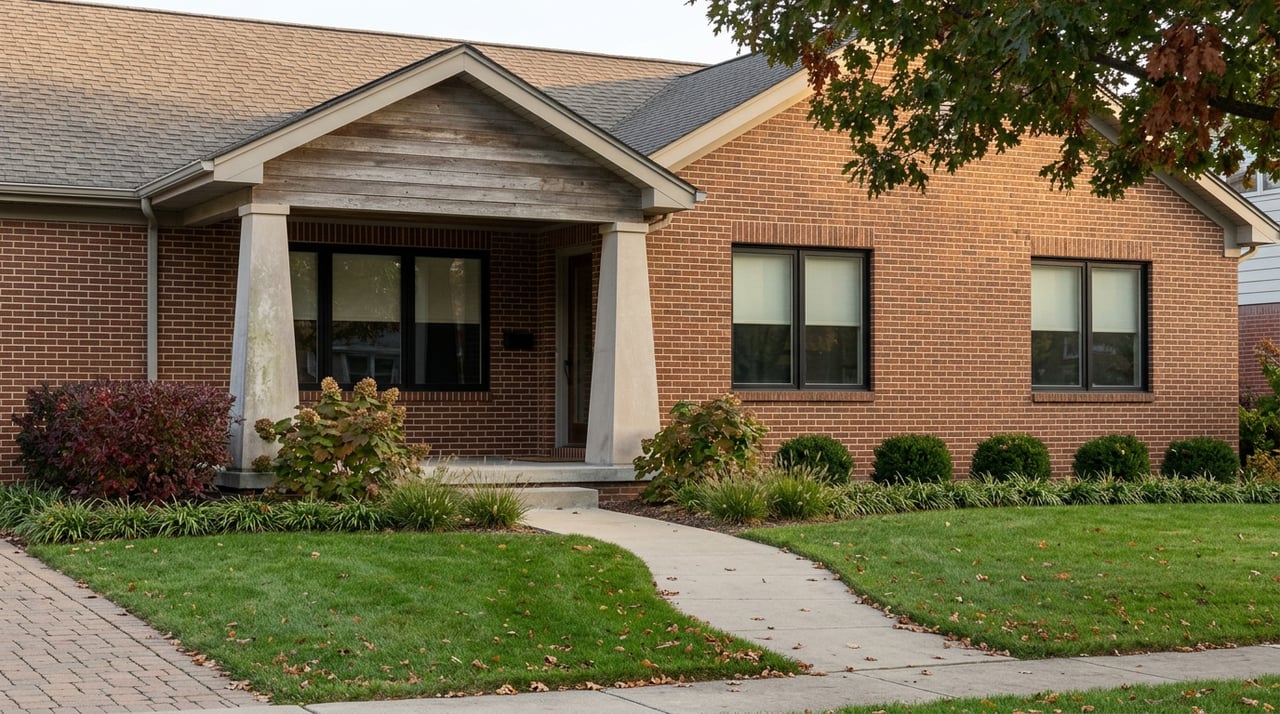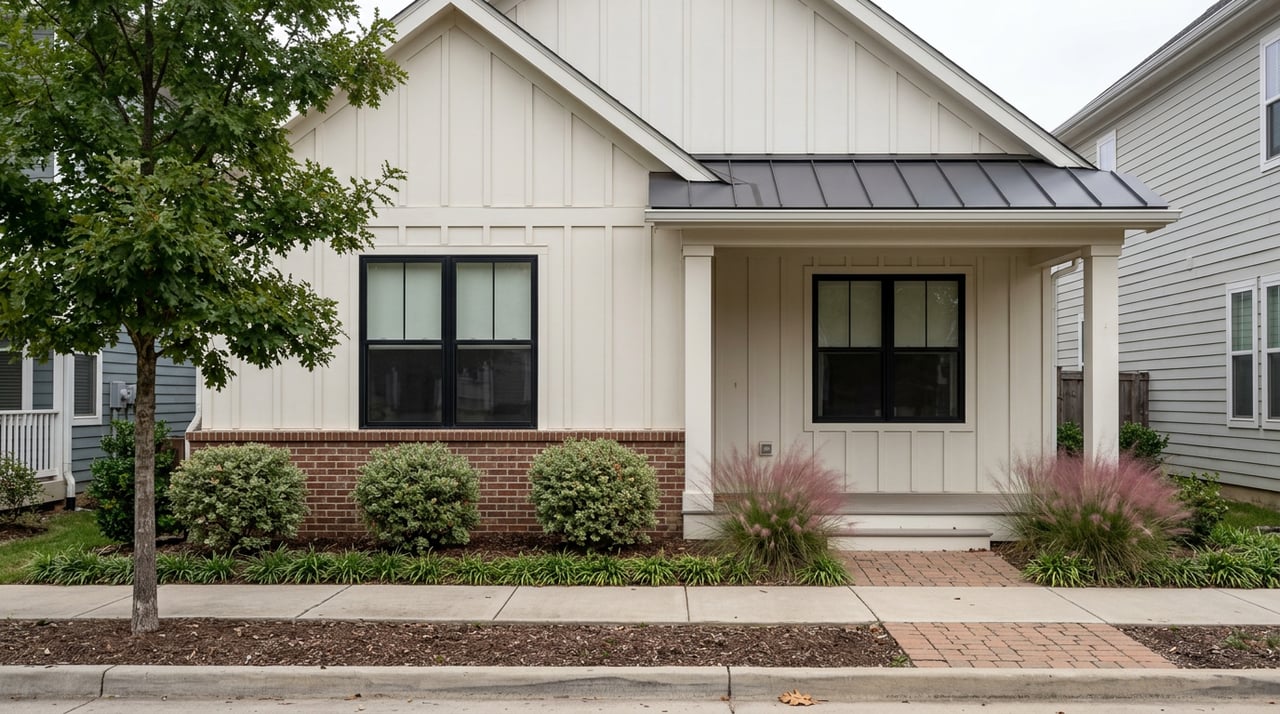
Pull up four real estate sites and search the same town, and you'd expect four versions of roughly the same number. In Mustang right now, you don't get that. One source puts the median sale price at $277,495. Another puts it at $247,025. A third shows the average list price sitting at $304,421. A fourth, looking only at new construction, lands at $276,000. All four describe the same twelve-square-mile city, in the same season of 2026.
None of these numbers is wrong. They're measuring different slices of a market that has quietly become something unusual for the Oklahoma City metro: a suburb where new construction makes up such a large share of what's for sale that the old habit of trusting a single median price no longer works. If you're comparing Mustang against other places to live, the gap between these numbers matters more than any one of them.
Four Numbers, One Town, Same Season
Here's what shows up when you check different sources during the same stretch of 2026.
| Source | What it measures | Window | Figure |
|---|---|---|---|
| Movoto | Median sale price, all homes | August 2026 | $277,495 |
| Homes.com | Median sale price, all homes | Trailing 12 months | $247,025 |
| Homes.com | Average list price, all homes | Trailing 12 months | $304,421 |
| Redfin | Median list price, new construction only | August 2026 | $276,000 |
The spread between the low end ($247,025) and the high end ($304,421) is more than $57,000. That's not rounding error or a slow news month. It's the visible seam between two markets that happen to share a zip code: homes that already sold and closed at a negotiated price, and homes still listed at a builder's sticker price before any incentive gets applied.
Movoto also logged something else worth sitting with. Homes in Mustang took a median of 76 days to sell in August 2026, up from 64 days the year before, even as the number of homes sold climbed to 410 from 341. More homes moving, but each one taking longer. That's the pattern you'd expect when a large wave of new supply enters a market at once and buyers have more to sort through before deciding.
The Market Underneath the Numbers
Mustang isn't confusing because agents can't agree on a price. It's confusing because it has become one of the more construction-heavy suburbs in the metro. Across the city, there are 61 different builders active in 217 new-home communities, with prices ranging from $185,990 to $1,195,000 and home sizes running from 1,050 to just over 4,000 square feet.
Drive the newer edges of town and you'll pass through Wild Horse Canyon and Montage, both built by D.R. Horton, along with Mustang Park, Somers Pointe, Ledgestone, Spitler Lake Estates, and the Canyons, built by Homes By Taber. Rausch Coleman Homes is active at Mustang Farms. Landmark Fine Homes and Brookfield Custom Homes are building on the higher end near Prairie Farms Drive and Mustang Park Boulevard. Quality Designed Homes has a community called Canyon Ridge Estates. Smaller infill projects like Creekside Village and Meadow Hills Estates are filling in lots closer to the older parts of town.
Every one of those communities lists new homes at a builder's asking price. Every one of those builders adjusts that price, sometimes weekly, depending on how fast a section is selling. A resale home two streets over doesn't move that way. Its owner set a price once, maybe adjusted it once after thirty days on the market, and that's largely it. When a portal averages all of that together, you get a number that describes neither market well.
What a Price Cut Actually Looks Like
The clearest way to see this is to look at specific homes instead of the aggregate. In Wild Horse Canyon, one D.R. Horton home was reduced from $243,900 to $231,266. Another home in the same community dropped from $248,150 to $235,261. Both cuts land around five percent, and both happened to homes that were already under contract-ready pricing, not distressed properties.
Price cuts are only part of it. At Canyon Ridge Estates, Quality Designed Homes has been offering a $7,500 credit that a buyer can apply toward closing costs, a rate buydown, or other approved expenses. Listings in Mustang Park and Mustang Valley have carried a $10,000 version of the same kind of offer. One listing in Meadow Hills Estates pointed buyers toward a 5 percent forgivable down payment program through the Oklahoma Housing Finance Agency. And for a stretch in Spitler Lake Estates, the incentive wasn't cash at all. Buyers who signed a full-price contract in February got a whole-home generator included at no extra cost, which meant the sticker price never moved even though the effective value of the deal did.
A $260,000 list price with a $10,000 closing-cost credit and a builder-paid rate buydown is not the same offer as a $260,000 resale home with neither. The number on the sign is identical. The actual cost to the buyer is not.
Resale Can't Always Match the Offer
This creates a real asymmetry, and it's the part that trips people up when they're comparing a new build against a resale house in the Mustang neighborhoods on this site. A resale seller generally can't offer a forgivable down payment program or a builder-subsidized rate buydown. Their price is their price, set by what an appraiser will support and what recent comparable sales in the area show.
That cuts both ways. A new-construction home advertised at a higher number can end up costing less per month once the incentives are applied, which is exactly why some buyers walk past a well-priced resale home without realizing they did. On the other side, a resale home has usually already been negotiated once, sometimes twice, before it reaches its current price. There's less room hiding behind the number, but what room exists is often tied to the home's actual condition (a needed roof, an older HVAC system) rather than a builder's incentive budget. If you're deciding between the two, you're really deciding between two different kinds of flexibility, not just two prices.
The Number Worth Asking For
If you're actively comparing homes in Mustang, the median price on any single site is a starting point, not a conclusion. A few habits get you closer to the number that actually matters:
- Ask for the builder's current incentive sheet on the specific home you're looking at, not the community average. Incentives change often and aren't reliably reflected on public listing sites.
- Ask how many price adjustments that specific lot has already had, since a home reduced once already may behave differently than a home still at its original price.
- Translate every offer into a monthly payment before comparing it to a resale home, especially if a rate buydown is temporary. A 2-1 buydown lowers the rate for two years and then resets to the full rate, which changes the comparison in year three.
- Pull resale comps from the same square mile rather than citywide averages, since a resale home's negotiating room tends to live in its condition and its time on market, not in a builder's promotional budget.
None of this makes one option better than the other. It just means the headline price, whichever site it comes from, is describing an average of two different games being played at the same time.
Frequently Asked Questions
Does a builder incentive show up in the price listed on real estate sites? Not reliably. The final number that closes on the closing disclosure reflects the actual purchase price, but whether an incentive was applied as a price reduction, a credit, or a non-cash perk like an upgrade or appliance package varies by builder and often isn't visible on a public listing page. Asking the builder's sales office directly is the only way to get the current terms.
Is new construction actually cheaper than resale in Mustang right now? It depends on the specific home and the specific incentive package active that week. A $276,000 new build with a $10,000 credit and a rate buydown can come out ahead of a $260,000 resale home with neither, once the monthly payment is worked out. There's no blanket answer, which is why comparing effective cost rather than sticker price matters more here than in a market with less new construction.
Why are homes taking longer to sell in Mustang than they did a year ago? Homes sold in a median of 76 days in August 2026, up from 64 days a year earlier, even as the number of homes sold increased. That combination usually points to more supply entering the market at once, giving buyers more to compare before committing, which slows the pace even when demand stays healthy.
If you're weighing a new build against a resale home anywhere in Mustang, or comparing Mustang against another part of the metro, Gina & Joseph Underwood can walk through the actual incentive terms on a specific new-construction lot and pull resale comps from the same stretch of road, so you're comparing real numbers instead of two different averages. And if your Mustang purchase depends on selling a home first, start there: get a free home valuation so you know your own number before you weigh anyone else's.